Wall-to-wall carpet is almost always synthetic and predictable. Area rugs are the opposite: one might be wool, the next a viscose 'art silk', the next a machine-woven synthetic or a hand-knotted heirloom — and each reacts differently to water, agitation and heat. Cleaning them all the same way is how colours bleed and delicate piles get crushed.
So we start by identifying what we're working with and testing for colourfastness in a hidden spot. From there we match the dry-soil removal, the agitation and the solution strength to the specific rug, then extract and dry it in a way that suits the fibre.
Most rugs we clean right in your home. When a piece genuinely needs full submersion at a specialist plant — some antiques and heavily urine-contaminated wool do — we'll say so honestly rather than take on something that belongs elsewhere.
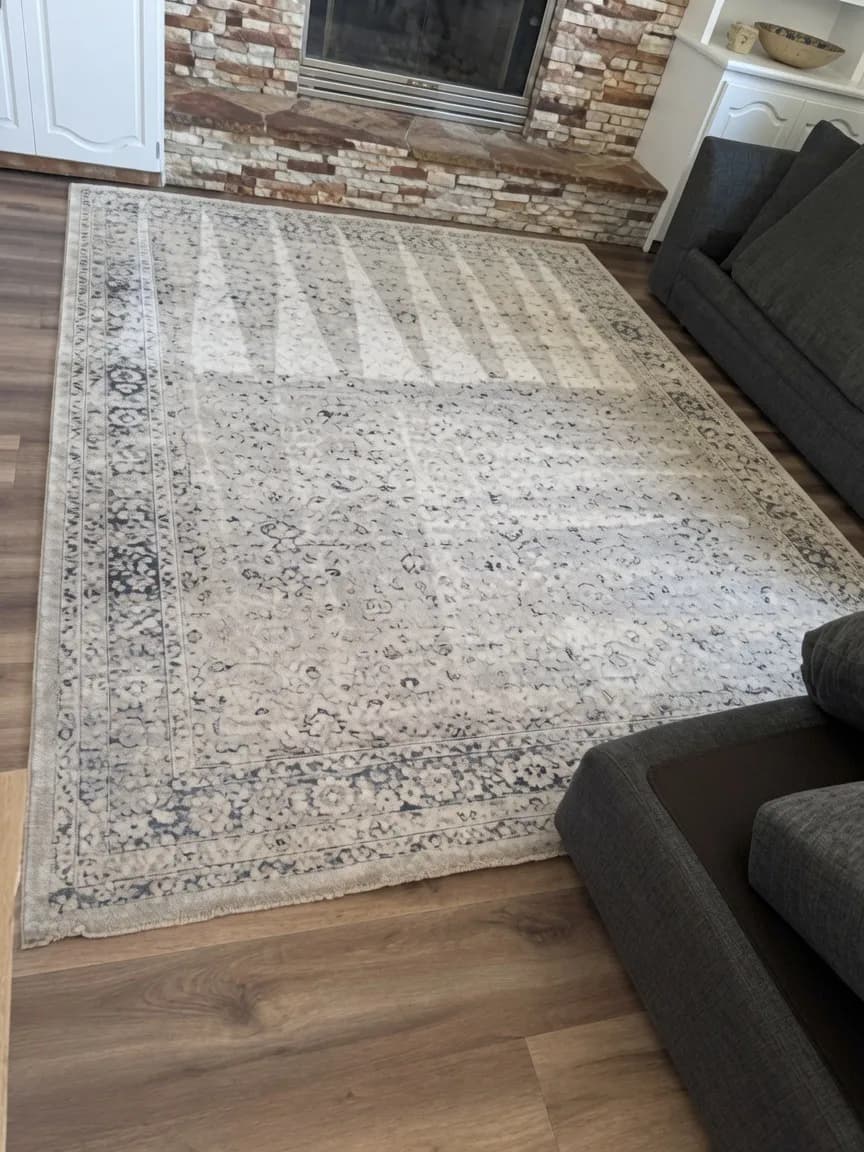
The method
Assess first, clean second
The assessment is the important part. We check the fibre, the foundation and the dyes, and we test a corner for colourfastness before committing. A dense wool rug can take real agitation; a viscose rug can be ruined by the wrong solution and too much water.
Once we know the rug, we remove the dry soil that a household vacuum leaves in the base, agitate at the right intensity, and clean with a fibre-appropriate solution. Extraction and drying are matched to the piece — nothing gets over-wet, and the colours that come out are the ones that went in.
Wool, synthetic and viscose
Wool is durable and cleans beautifully, but it browns if over-wet and needs the right pH. Synthetics are forgiving. Viscose — sometimes sold as 'art silk' or 'bamboo silk' — is the diva: it discolours and gets rough with water alone and needs a very careful, low-moisture approach.
Knowing which is which before we start is the whole job. We'll tell you what your rug is and how it'll be handled.
Why we colour-test
Older and hand-dyed rugs can have dyes that aren't fully fixed, and reds and deep blues are the usual culprits for bleeding into adjacent pale areas. A quick colourfastness test in a hidden spot tells us whether the rug is safe to wet-clean or needs a gentler method — a two-minute check that prevents an irreversible mistake.